
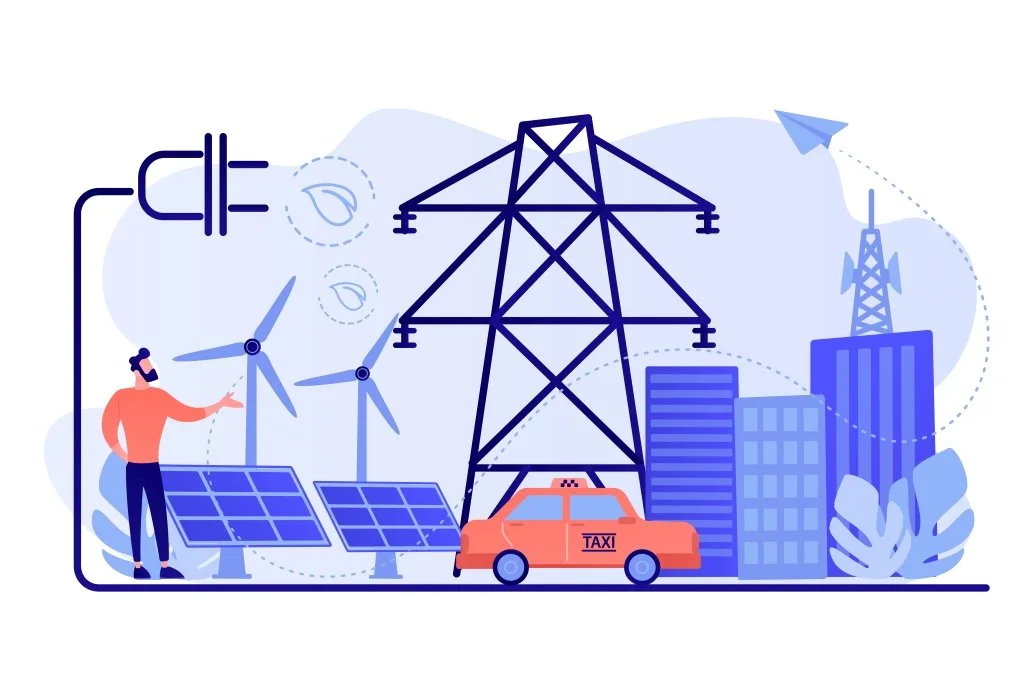
How Virtual Power Plants (VPP) Work
Australia’s energy grid faces a lunchtime glut and a dinner-time crunch — much like McDonald’s having too many burgers at midday and not enough in the evening. Virtual Power Plants (VPPs) offer a clever fix: by connecting home batteries to the grid, you can sell stored solar power when it’s most valuable, help balance supply and demand, and even turn a profit. In this blog, we break down how VPPs work, why they’re more useful in some states than others, and how you can take control of when and for how much you sell your electricity.
TLDR: VPP’s are growing because of the abundance of renewable energy. They are helping to stabilise the grid and smooth out the peaks and troughs.
McDonald’s Consumption v Energy Consumption
During the day, as we go about our lives, we switch on the kettle for a hot drink or the heater to stay warm. The electricity is just there — ready, instant, and unquestioned.
Imagine if ordering a burger on the McDonald’s app meant it appeared in your hands instantly. That’s how the grid works: it has to deliver exactly what’s needed, at the precise moment it’s needed.
Now, let’s stretch that McDonald’s analogy a bit further. Imagine their burger supply chain worked differently. You’d still buy burgers from your local McDonald’s, but none would be cooked there. Instead, every Big Mac in the country would be prepared in one giant factory out in the countryside. As soon as they were ready, they’d be transported instantly to restaurants nationwide.
In this analogy, the giant factory is the power station, the transport network is the poles and wires, and the local McDonald’s restaurants are the substations in your area.
In this system, the factory adjusts its output based on demand — fewer burgers at 2 a.m., more during lunchtime rush. But there are two big constraints:
They can’t stop production entirely (except for scheduled maintenance).
They can’t speed up or slow down production instantly. The factory prefers smooth, steady output, but customers are unpredictable and eat in bursts, not in a constant flow.
For decades, this model worked just fine. But now imagine people start realising they can make their own burgers at home — and not only that, they often have extras to sell, especially at lunchtime. Suddenly, McDonald’s is competing with thousands of home kitchens. The problem? The big factory can’t just shut down for a few hours; it’s still churning out burgers.
That’s exactly what’s happening in Australia’s electricity market. At midday, when solar panels are producing more energy than people can use, there’s an oversupply. In Queensland, for example, wholesale electricity prices often drop below zero in the middle of the day. That means you can literally be paid to use electricity — the energy equivalent of McDonald’s paying you to take a Big Mac off their hands at 12:30 p.m., about 80% of the time.
Energy Demand
The electricity network has the opposite problem between 5:30 p.m. and 7:00 p.m. Everyone wants to eat then, and the grid faces a new challenge: the transport network is struggling to keep up with demand. There are only so many trucks to deliver the food, and they are going flat out. So, what’s the solution? Lower demand at this time by encouraging people to not only keep producing their own food but also sell some of it at night to help the grid. This is where Virtual Power Plants (VPPs) come in.
How Virtual Power Plants Help Energy Demand
By connecting your battery system to the grid and selling electricity at night, you help smooth out the grid while also making some extra money.
It should be noted, however, that there are some variables to this approach:
Not all batteries connected to the grid will be able to supply power when needed.
Different batteries will have different amounts of stored energy available.
Battery resources will not be deployed evenly across the country.
On that last point, a VPP-connected battery system will not be as useful in Tasmania as it is in Queensland. The wholesale market shows that electricity prices in Queensland are often negative from 11:00 a.m. to 2:00 p.m., but can rise to as much as 50c/kWh between 5:30 p.m. and 7:00 p.m. This variation is far less in Tasmania, where most electricity comes from hydro — essentially giving the state a very large battery system already.
Controlling your Solar Batteries in a Virtual Power Plant
So, while the system isn’t perfect, it will help. The question is: who benefits more — the grid, or the person connecting their battery to the VPP and getting paid? Because electricity prices are market-driven, grid operators decide when they need electricity and how much they’re willing to pay for it. The pricing is dynamic, and battery owners can set the price at which they are willing to sell.
It’s a bit like selling items on Facebook Marketplace: you set a price, receive various offers, and eventually someone might offer full price — and you sell. You also decide how much stock (energy) you want to sell at any given time.
With a VPP, you control both the amount of electricity you sell and the price. Mobile apps make it simple to set up and manage. We now have a convergence of technologies that makes the process straightforward — and the good news is that people are already doing this. There are active forums where participants share experiences and advice on balancing electricity sales with keeping enough stored for personal use.
Another point worth noting is that you don’t have to wait for your solar system to recharge your battery. You could sell electricity at night during peak times and then buy it back at 11:00 p.m. when prices drop. There are several videos online explaining how this works — here’s one that discusses using Amber Electric, a VPP provider.
Next week, we’ll discuss whether participating in a VPP affects your battery warranty.
Thinking About Adding a Battery?
Get in touch with us today and we’ll:
Check if you’re eligible for the rebate.
Provide a free consult to find you the right solar battery solution.
Connect you with a certified installer.
Why Battery Storage?
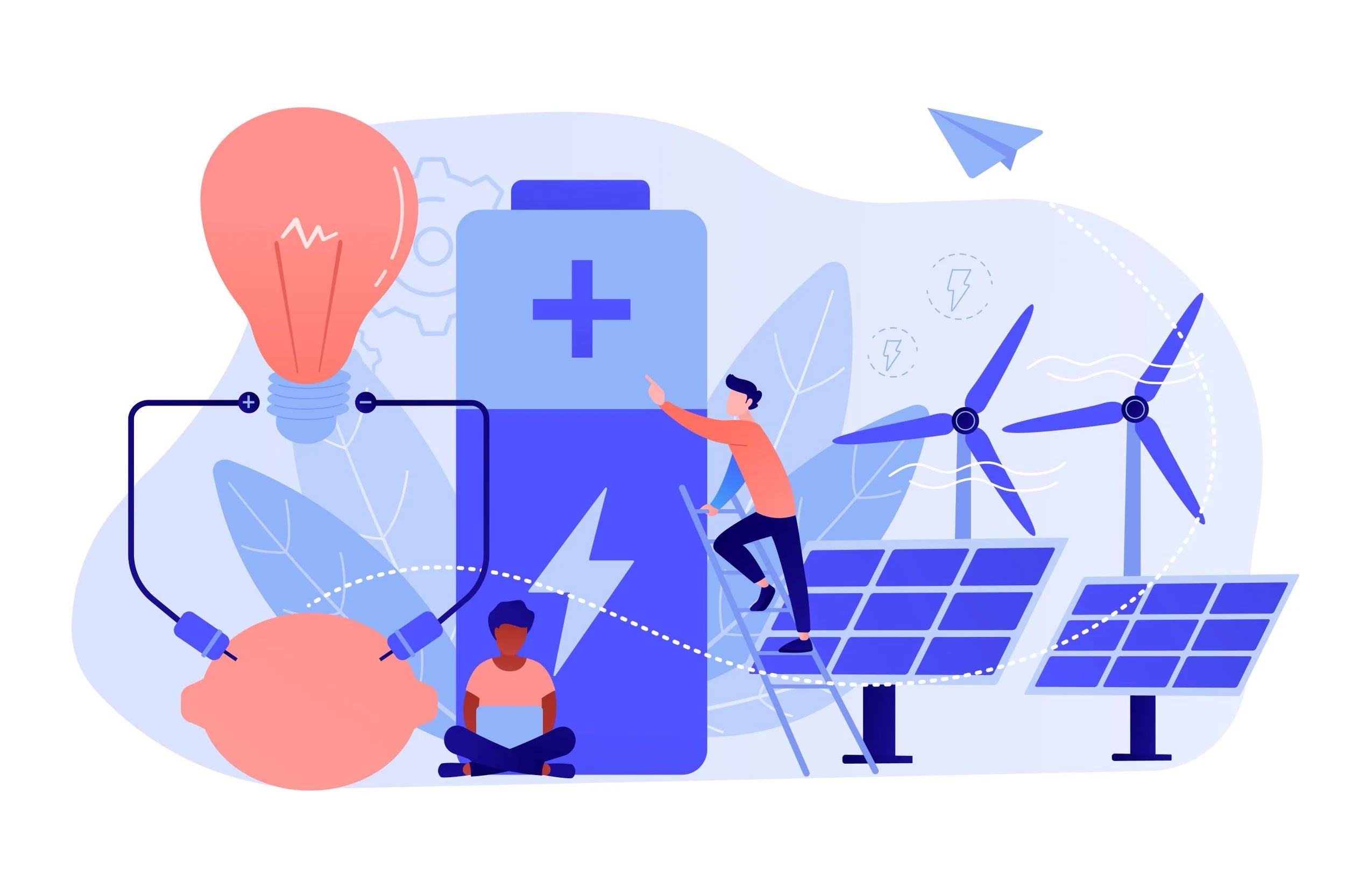
Thinking about adding a battery to your solar system? Battery storage lets you make the most of your excess solar energy, lower your electricity bills, and keep your essential appliances running during blackouts. With prices for lithium batteries dropping dramatically in recent years, solar batteries are now more affordable and practical than ever for Australian homes.
TLDR: The three main reasons for battery storage are:
Making use of excess electricity from solar panels
Reducing monthly or quarterly electricity bills
Providing backup power for essential circuits such as lights, refrigeration, internet modem, etc.
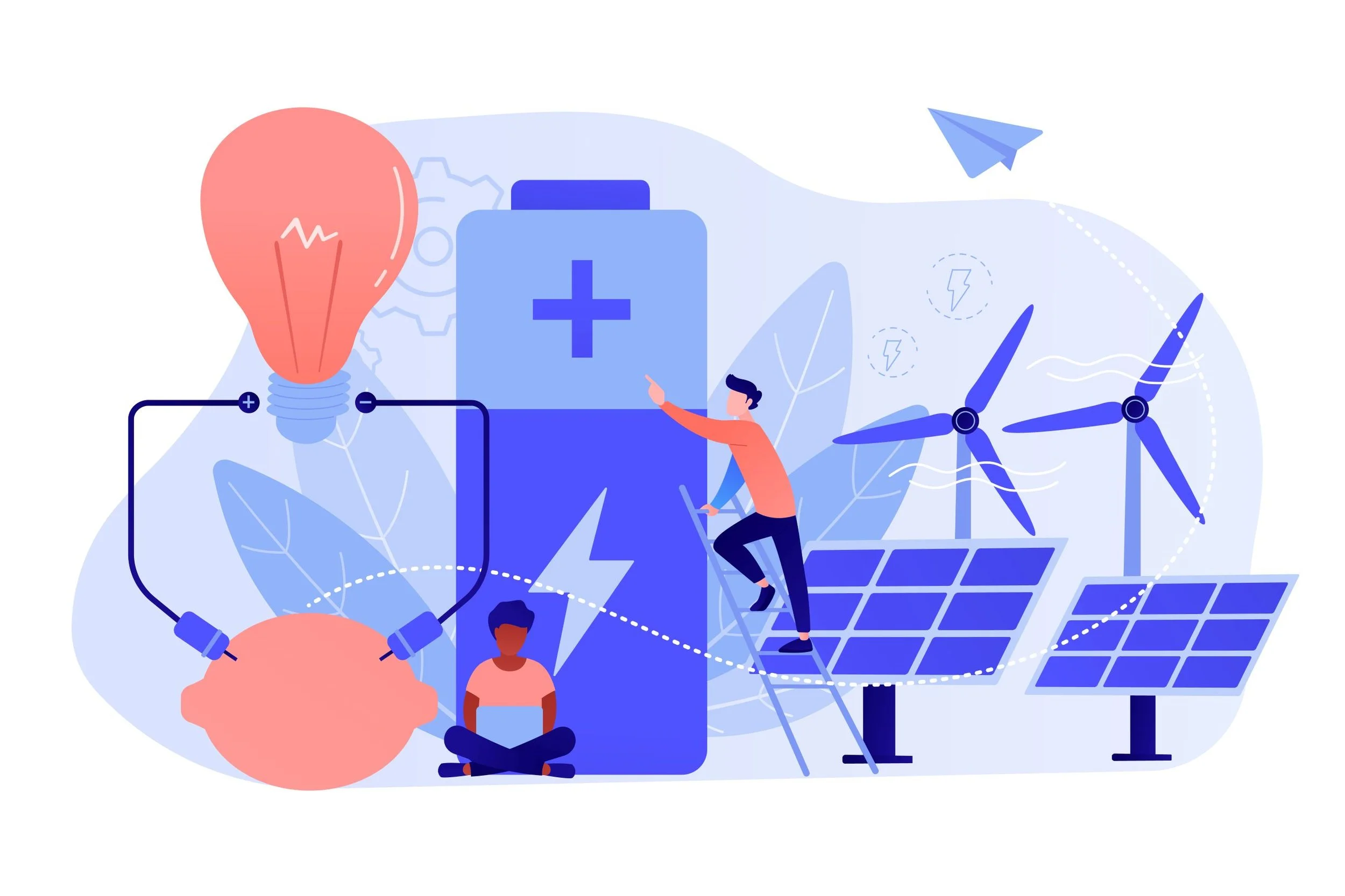
Where did Battery Storage come from?
Electricity is everywhere. We can’t see it, but most of the things we use in life are powered by it. Transportation is also beginning to adapt to electricity. Trains have relied on electricity for years, and now cars are trending in the same direction.
If we rely on electricity for most things, it makes sense to store it so we can use it when needed. Mobile phones wouldn’t be as useful without rechargeable batteries. Similarly, the rise of portable tools like drills, impact drivers, grinders, and vacuum cleaners shows how much we depend on batteries in daily life.
Australia has been at the forefront of adopting battery storage in homes. Given the size of the country, extending the grid to homes located many kilometres from the main line has often been uneconomical. Until recently, lead-acid batteries were the predominant form of storage. However, they were bulky, required well-ventilated spaces, and often needed regular maintenance—making them impractical for suburban homes.
The rise of lithium-ion battery storage has addressed many of these challenges. In the early 1990s, when lithium-ion batteries first became commercially available, the cost was about $7,500 USD per kWh. Today in Australia, you can buy high-quality LiFePO4 cells (without a battery management system or electronics) for around $220 per kWh. Prices have dropped dramatically, making battery storage far more economical.
How do Batteries work with Solar Panels?
If you have solar panels, storing excess electricity (that would otherwise be exported to the grid during the day) for use at night can make you more energy self-sufficient.
For example, exporting surplus energy to the grid might earn you 5–8c per kWh, whereas using stored energy at night could offset electricity that costs 30–35c per kWh. This reduces your power bill significantly. Electricity retailers are also moving towards time-of-use pricing, charging more during peak hours and less during off-peak periods. On such tariffs, you might pay 50c per kWh between 5–9 pm.
What is a Kilowatt-Hour?
We’ve introduced the term “kWh,” which can be confusing for some readers. Let’s break it down: kWh stands for kilowatt-hour—1,000 watt-hours. It’s the standard unit for measuring electricity consumption. Here are a few practical examples:
Electric kettle (1,800 watts): If boiling water takes 3 minutes, it uses about 0.09 kWh. At 30c per kWh, that’s roughly 2.7c per boil.
55-inch LCD TV (100 watts): Running it for 3 hours uses 0.3 kWh, costing about 9c.
LED lights (10 lights at 13 watts each): Running them for 5 hours uses 0.65 kWh, costing about 20c.
While these examples are straightforward, appliances like fridges and air conditioners are trickier to calculate. A fridge rated at 180 watts, though powered on 24/7, may only use 1.5–1.8 kWh per day because the compressor cycles on and off. Air conditioners also vary, using less energy once the room reaches the desired temperature.
How much could a solar battery save a homeowner?
If the price difference between exporting solar and buying electricity is 25c per kWh, and you use 12 kWh of stored energy at night, you could save about $3 per day—or around $1,100 per year. Savings could be even higher on time-of-use tariffs.
A third benefit of solar batteries is backup power for essential circuits during outages. Typically, these include lights, TV, fridge, and the internet modem. For example, if you’re hosting friends for the footy finals and the grid goes down, you wouldn’t even notice the power cut. While grid reliability is high in urban areas, rural areas experience more disruptions.
Backup power becomes critical during extreme weather events, such as storms that damage powerlines. After Queensland’s Cyclone Alfred, some households were without power for days. A generator can help in such cases, but a solar battery system is seamless—and silent. However, during overcast periods, you might need to ration energy if there isn’t enough sunlight to recharge the battery.
A fourth benefit of solar batteries is participation in Virtual Power Plant (VPP) schemes—this will be the topic of next week’s blog post.
Thinking About Adding a Battery?
Get in touch with us today and we’ll:
Check if you’re eligible for the rebate.
Provide a free consult to find you the right solar battery solution.
Connect you with a certified installer.