

Virtual Power Plants and Battery Warranties
TL:DR: Battery manufacturers take different approaches to warranties. This matters when deciding how much power to export to the grid and what minimum price makes it worthwhile.

Virtual Power Plants and Your Battery
In our previous blog, we discussed how Virtual Power Plants (VPPs) help the electricity grid by smoothing out peaks and troughs in demand. For customers, VPPs also provide an opportunity to earn extra income by selling electricity when wholesale prices are high.
But what about your battery warranty? Exporting electricity to the grid increases battery use, which can shorten the warranty period depending on how it’s structured. Let’s explore what that means for different manufacturers.
How Battery Warranties Work
Most battery warranties are based on two factors:
Time (e.g., 10 years)
Energy throughput (total amount of energy cycled through the battery)
The warranty expires when either limit is reached. Here are some examples:
Sigenergy 8kWh: 10 years, 70% of Day 1 capacity, or 23.77 MWh throughput (whichever comes first).
BYD HVM 8.28 kWh: 10 years, 60% of Day 1 capacity, or 25.62 MWh throughput (whichever comes first).
Sungrow SBR 9.2 kWh: 10 years or 4,000 cycles, with 70% capacity retention.
Other brands, such as Tesla, offer a 10-year warranty with 70% retention, but only if the system remains connected to the internet most of the time. If it isn’t, the warranty may be cut to just four years—we’ve seen this happen with another brand as well.
In short: most warranties guarantee around 70% capacity after 10 years, but the fine print (throughput limits, internet connectivity, cycle counts) matters.
The Trade-Off: Selling to the Grid vs Warranty
The Federal Battery Rebate scheme was designed to encourage homeowners to sell electricity into VPPs. But here’s the catch:
Exporting electricity adds to your battery’s energy throughput, which can shorten its warranty.
To offset this, you need to ensure the price you’re paid makes it worthwhile.
Let’s run the numbers.
A Simple Example
Using the Sigenergy 8kWh:
Total throughput: 23.77 MWh
Battery cost: $4,995
Storage cost = $0.21/kWh
If charging costs 5c/kWh, you’d need to sell electricity for more than 26c/kWh just to break even. Selling above this price is where you start to see real value.
Wholesale prices often exceed this at night, so in many cases you wouldn’t be losing out.
When It’s Worthwhile
Two main factors determine profitability:
Input cost – the price of electricity you put into the battery.
Export price – what you’re paid when selling back to the grid.
Profitability also depends on location. For example, Queensland wholesale prices are often higher than in Tasmania.
So, when are the best times? Typically:
Hot days when air conditioners are running at full tilt.
Cooler months, when heating demand spikes.
In fact, in Q2 this year there were 66 separate events where wholesale prices spiked above $5.00/kWh for 30 minutes. Selling at these times is extremely profitable.
Battery Longevity and Best Practices
Another key question: Does battery life depend on how you charge and discharge it?
Yes.
Lithium batteries can usually discharge down to 10% SoC (State of Charge) and recharge to 100%, delivering 3,000–6,000 cycles.
However, keeping the SoC within a narrower range dramatically increases lifespan. For example:
80% to 20% SoC = longer life
70% to 30% SoC = even longer
Other factors also help:
Keeping the battery cool
Avoiding high charge/discharge currents
Rule of thumb:
If you regularly sell around 25–30% of your battery’s capacity while keeping it cool, you won’t see a meaningful reduction in long-term performance compared to not exporting at all.
Research by Jeff Dahn at Dalhousie University confirms this in EV battery testing. (For the technical details, watch from 2:22 to 13:00 in his Video.)
Key Takeaways
Selling electricity via a VPP increases throughput, which can shorten your warranty.
Make sure the price you’re paid justifies the trade-off.
Manage charge/discharge levels and temperature to extend your battery’s life.
Done right, participating in a VPP should have minimal impact on your battery’s long-term performance.
Final Thought
Think of it like this: using your battery for VPPs is similar to using a new car (still under warranty) for Uber or DoorDash. It racks up kilometres faster and eats into the warranty allowance. But if you’re paid enough, and you treat the car well, the extra use won’t matter much.

Thinking About Adding a Battery?
Get in touch with us today and we’ll:
Check if you’re eligible for the rebate.
Provide a free consult to find you the right solar battery solution.
Connect you with a certified installer.
How Virtual Power Plants (VPP) Work
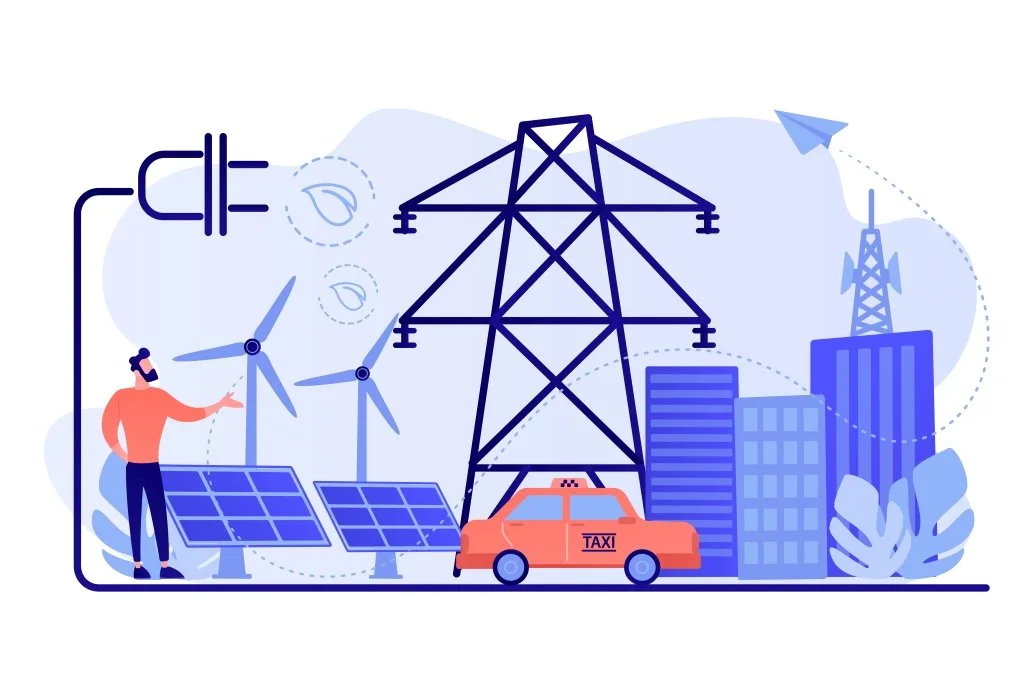
Australia’s energy grid faces a lunchtime glut and a dinner-time crunch — much like McDonald’s having too many burgers at midday and not enough in the evening. Virtual Power Plants (VPPs) offer a clever fix: by connecting home batteries to the grid, you can sell stored solar power when it’s most valuable, help balance supply and demand, and even turn a profit. In this blog, we break down how VPPs work, why they’re more useful in some states than others, and how you can take control of when and for how much you sell your electricity.
TLDR: VPP’s are growing because of the abundance of renewable energy. They are helping to stabilise the grid and smooth out the peaks and troughs.
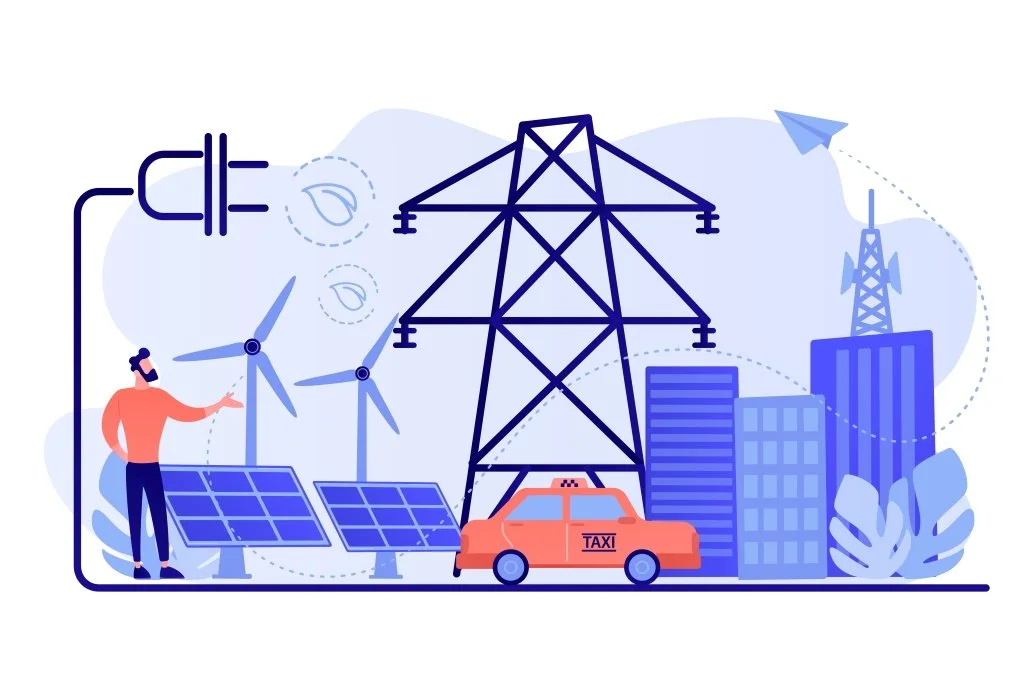
McDonald’s Consumption v Energy Consumption
During the day, as we go about our lives, we switch on the kettle for a hot drink or the heater to stay warm. The electricity is just there — ready, instant, and unquestioned.
Imagine if ordering a burger on the McDonald’s app meant it appeared in your hands instantly. That’s how the grid works: it has to deliver exactly what’s needed, at the precise moment it’s needed.
Now, let’s stretch that McDonald’s analogy a bit further. Imagine their burger supply chain worked differently. You’d still buy burgers from your local McDonald’s, but none would be cooked there. Instead, every Big Mac in the country would be prepared in one giant factory out in the countryside. As soon as they were ready, they’d be transported instantly to restaurants nationwide.
In this analogy, the giant factory is the power station, the transport network is the poles and wires, and the local McDonald’s restaurants are the substations in your area.
In this system, the factory adjusts its output based on demand — fewer burgers at 2 a.m., more during lunchtime rush. But there are two big constraints:
They can’t stop production entirely (except for scheduled maintenance).
They can’t speed up or slow down production instantly. The factory prefers smooth, steady output, but customers are unpredictable and eat in bursts, not in a constant flow.
For decades, this model worked just fine. But now imagine people start realising they can make their own burgers at home — and not only that, they often have extras to sell, especially at lunchtime. Suddenly, McDonald’s is competing with thousands of home kitchens. The problem? The big factory can’t just shut down for a few hours; it’s still churning out burgers.
That’s exactly what’s happening in Australia’s electricity market. At midday, when solar panels are producing more energy than people can use, there’s an oversupply. In Queensland, for example, wholesale electricity prices often drop below zero in the middle of the day. That means you can literally be paid to use electricity — the energy equivalent of McDonald’s paying you to take a Big Mac off their hands at 12:30 p.m., about 80% of the time.
Energy Demand
The electricity network has the opposite problem between 5:30 p.m. and 7:00 p.m. Everyone wants to eat then, and the grid faces a new challenge: the transport network is struggling to keep up with demand. There are only so many trucks to deliver the food, and they are going flat out. So, what’s the solution? Lower demand at this time by encouraging people to not only keep producing their own food but also sell some of it at night to help the grid. This is where Virtual Power Plants (VPPs) come in.
How Virtual Power Plants Help Energy Demand
By connecting your battery system to the grid and selling electricity at night, you help smooth out the grid while also making some extra money.
It should be noted, however, that there are some variables to this approach:
Not all batteries connected to the grid will be able to supply power when needed.
Different batteries will have different amounts of stored energy available.
Battery resources will not be deployed evenly across the country.
On that last point, a VPP-connected battery system will not be as useful in Tasmania as it is in Queensland. The wholesale market shows that electricity prices in Queensland are often negative from 11:00 a.m. to 2:00 p.m., but can rise to as much as 50c/kWh between 5:30 p.m. and 7:00 p.m. This variation is far less in Tasmania, where most electricity comes from hydro — essentially giving the state a very large battery system already.
Controlling your Solar Batteries in a Virtual Power Plant
So, while the system isn’t perfect, it will help. The question is: who benefits more — the grid, or the person connecting their battery to the VPP and getting paid? Because electricity prices are market-driven, grid operators decide when they need electricity and how much they’re willing to pay for it. The pricing is dynamic, and battery owners can set the price at which they are willing to sell.
It’s a bit like selling items on Facebook Marketplace: you set a price, receive various offers, and eventually someone might offer full price — and you sell. You also decide how much stock (energy) you want to sell at any given time.
With a VPP, you control both the amount of electricity you sell and the price. Mobile apps make it simple to set up and manage. We now have a convergence of technologies that makes the process straightforward — and the good news is that people are already doing this. There are active forums where participants share experiences and advice on balancing electricity sales with keeping enough stored for personal use.
Another point worth noting is that you don’t have to wait for your solar system to recharge your battery. You could sell electricity at night during peak times and then buy it back at 11:00 p.m. when prices drop. There are several videos online explaining how this works — here’s one that discusses using Amber Electric, a VPP provider.
Next week, we’ll discuss whether participating in a VPP affects your battery warranty.

Thinking About Adding a Battery?
Get in touch with us today and we’ll:
Check if you’re eligible for the rebate.
Provide a free consult to find you the right solar battery solution.
Connect you with a certified installer.
What are Virtual Power Plants?
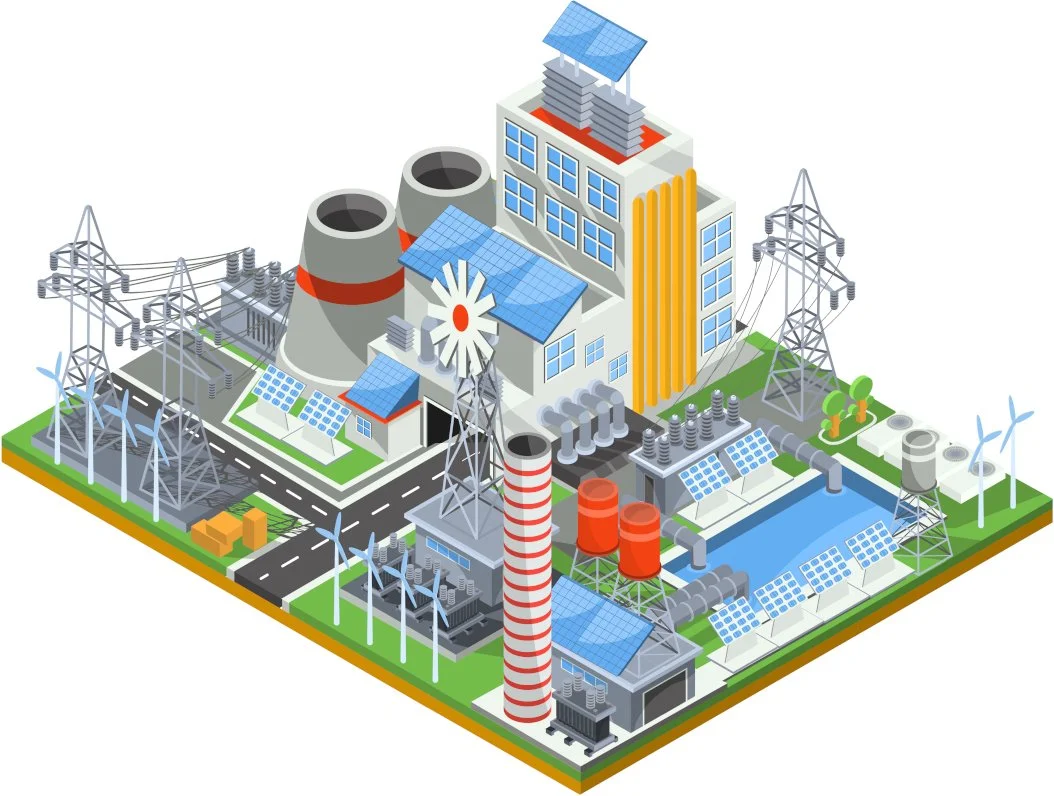
A Virtual Power Plant (VPP) is a network of many small, distributed energy systems like solar panels and batteries, centrally managed to work together as a single power source. In Australia’s evolving energy landscape—where renewables like solar and wind are increasingly common but unpredictable—VPPs help stabilize the grid by coordinating these resources and allowing battery owners to earn income by supplying power during peak demand. Curious how your home battery could become part of this energy revolution and even put money back in your pocket? Read on to discover how VPPs are transforming Australia’s electricity system for a cleaner, smarter future.
TLDR: A Virtual Power Plant (VPP) is not about having battery storage or energy generation located in one central place. Instead, it consists of numerous small power generation systems scattered across the country, all centrally controlled from a few locations.
What Are the Main Sources of Electricity in Australia?
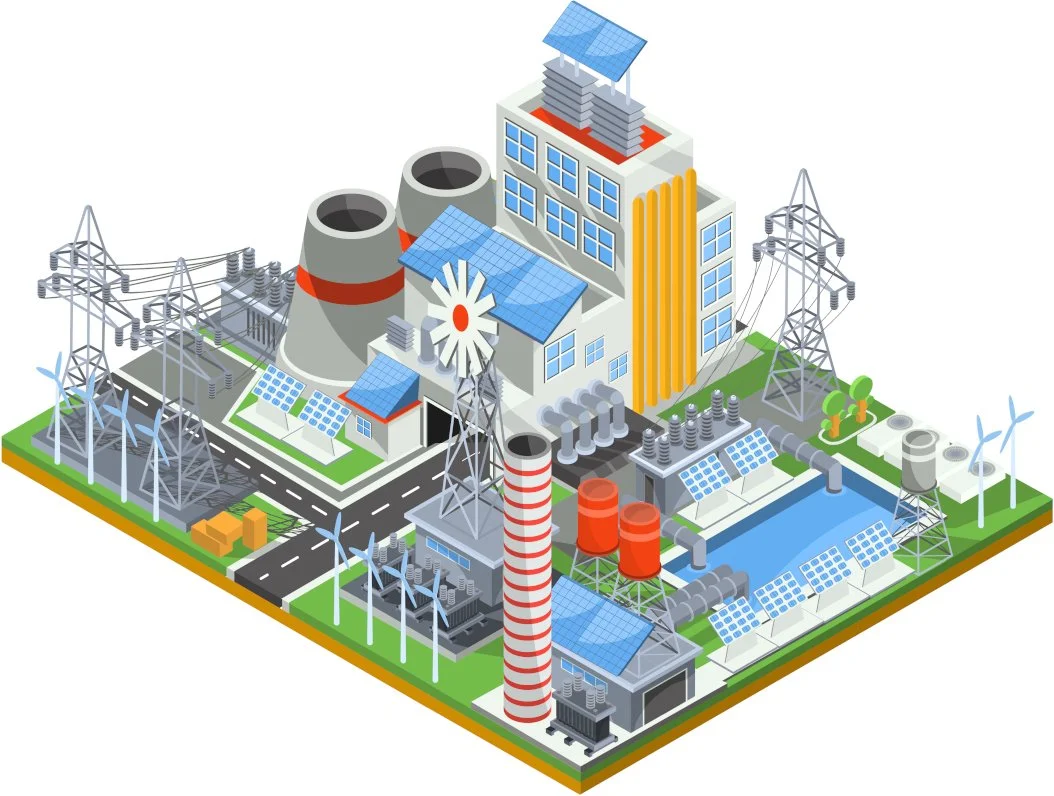
In Australia, electricity primarily comes from coal, natural gas, hydroelectricity, and increasingly from wind and solar. Unlike many other countries, Australia does not have nuclear power generation. The downside of coal and gas is their reliance on hydrocarbons, contributing to pollution. Conversely, the disadvantage of wind and solar is their intermittent reliability. Hydroelectricity stands out as the most efficient and flexible form of energy generation, in addition to being non-polluting. Collectively, these diverse sources power essential appliances such as fridges, air conditioners, and ovens, highlighting our profound dependence on electricity.
Australia has three main electricity grids. The primary grid connects all states and the ACT, excluding WA and NT, which operate their own independent grids. The eastern grid is managed by the Australian Energy Market Operator (AEMO), though each state's grid is managed individually. The ACT falls under the jurisdiction of the NSW grid authority.
Until about ten years ago, the eastern grid was relatively straightforward to manage. Although occasional unexpected outages at power stations presented challenges, contingency plans typically addressed these effectively.
Today, two significant changes affect the grid:
Reduced daytime electricity demand.
Increased generation from renewable sources.
The decrease in daytime demand results from widespread adoption of photovoltaic (PV) solar energy, where Australia leads globally on a domestic level. Unlike coal, gas, or hydro, renewable energy can be unpredictable, comparable to an unreliable employee—capable when available but not guaranteed.
The original design of Australia's electricity grid catered to a unidirectional energy flow. However, with electricity now generated by end-users, the grid has had to adapt to accommodate multiple smaller, unpredictable energy inputs.
Australia, along with many other countries, is now navigating how to manage these variable energy inputs. The partial solution to this issue lies in energy storage. By capturing and storing renewable energy when it's abundant, we create a reliable source of power. This is often referred to as SWB—Solar, Wind, and Batteries.
What Role Do Virtual Power Plants Play?
Given this context, why are virtual power plants being promoted? VPPs bring predictability and stability to the grid by centrally managing numerous distributed PV/Battery systems via the internet. By granting control to the electricity utility, these systems collectively manage substantial energy generation—potentially 1-5 Megawatts (MW)—equivalent to a small gas or hydroelectric plant.
But what incentive exists for individuals allowing utilities to control their battery systems? The answer lies in financial benefits. Utilities might pay up to double the standard electricity rate by discharging batteries during peak demand hours, typically from 5:30 pm to 7:00 pm. This creates a win-win scenario: utilities smooth out demand, and battery owners earn additional income. On average, this occurs 4 to 5 times weekly, varying seasonally.
Battery owners retain control over discharge limits—for instance, setting a minimum battery level of 50%. This ensures the VPP management company cannot discharge batteries below that threshold. Each household can set different discharge limits, offering flexibility.
Participation in a VPP means engaging dynamically in the wholesale electricity market. If wholesale prices typically sit at 12c/kWh but spike to 35c between 5:30 pm and 7:00 pm, participants can profit by selling stored energy at higher rates. When battery levels drop, electricity can be repurchased at lower rates once prices stabilize.
The rise of VPPs directly results from increased renewable energy generation. Historically, power generation occurred at a handful of large plants; now, generation is distributed across many locations. VPPs consolidate these dispersed sources, effectively managing them as a single entity.
There's much more to explore about VPPs, electricity trading, and grid stability, which we'll discuss further in our next blog.
Thinking About Adding a Battery?
Get in touch with us today and we’ll:
Check if you’re eligible for the rebate.
Provide a free consult to find you the right solar battery solution.
Connect you with a certified installer.

Why Battery Storage?
Thinking about adding a battery to your solar system? Battery storage lets you make the most of your excess solar energy, lower your electricity bills, and keep your essential appliances running during blackouts. With prices for lithium batteries dropping dramatically in recent years, solar batteries are now more affordable and practical than ever for Australian homes.
TLDR: The three main reasons for battery storage are:
Making use of excess electricity from solar panels
Reducing monthly or quarterly electricity bills
Providing backup power for essential circuits such as lights, refrigeration, internet modem, etc.

Where did Battery Storage come from?
Electricity is everywhere. We can’t see it, but most of the things we use in life are powered by it. Transportation is also beginning to adapt to electricity. Trains have relied on electricity for years, and now cars are trending in the same direction.
If we rely on electricity for most things, it makes sense to store it so we can use it when needed. Mobile phones wouldn’t be as useful without rechargeable batteries. Similarly, the rise of portable tools like drills, impact drivers, grinders, and vacuum cleaners shows how much we depend on batteries in daily life.
Australia has been at the forefront of adopting battery storage in homes. Given the size of the country, extending the grid to homes located many kilometres from the main line has often been uneconomical. Until recently, lead-acid batteries were the predominant form of storage. However, they were bulky, required well-ventilated spaces, and often needed regular maintenance—making them impractical for suburban homes.
The rise of lithium-ion battery storage has addressed many of these challenges. In the early 1990s, when lithium-ion batteries first became commercially available, the cost was about $7,500 USD per kWh. Today in Australia, you can buy high-quality LiFePO4 cells (without a battery management system or electronics) for around $220 per kWh. Prices have dropped dramatically, making battery storage far more economical.
How do Batteries work with Solar Panels?
If you have solar panels, storing excess electricity (that would otherwise be exported to the grid during the day) for use at night can make you more energy self-sufficient.
For example, exporting surplus energy to the grid might earn you 5–8c per kWh, whereas using stored energy at night could offset electricity that costs 30–35c per kWh. This reduces your power bill significantly. Electricity retailers are also moving towards time-of-use pricing, charging more during peak hours and less during off-peak periods. On such tariffs, you might pay 50c per kWh between 5–9 pm.
What is a Kilowatt-Hour?
We’ve introduced the term “kWh,” which can be confusing for some readers. Let’s break it down: kWh stands for kilowatt-hour—1,000 watt-hours. It’s the standard unit for measuring electricity consumption. Here are a few practical examples:
Electric kettle (1,800 watts): If boiling water takes 3 minutes, it uses about 0.09 kWh. At 30c per kWh, that’s roughly 2.7c per boil.
55-inch LCD TV (100 watts): Running it for 3 hours uses 0.3 kWh, costing about 9c.
LED lights (10 lights at 13 watts each): Running them for 5 hours uses 0.65 kWh, costing about 20c.
While these examples are straightforward, appliances like fridges and air conditioners are trickier to calculate. A fridge rated at 180 watts, though powered on 24/7, may only use 1.5–1.8 kWh per day because the compressor cycles on and off. Air conditioners also vary, using less energy once the room reaches the desired temperature.
How much could a solar battery save a homeowner?
If the price difference between exporting solar and buying electricity is 25c per kWh, and you use 12 kWh of stored energy at night, you could save about $3 per day—or around $1,100 per year. Savings could be even higher on time-of-use tariffs.
A third benefit of solar batteries is backup power for essential circuits during outages. Typically, these include lights, TV, fridge, and the internet modem. For example, if you’re hosting friends for the footy finals and the grid goes down, you wouldn’t even notice the power cut. While grid reliability is high in urban areas, rural areas experience more disruptions.
Backup power becomes critical during extreme weather events, such as storms that damage powerlines. After Queensland’s Cyclone Alfred, some households were without power for days. A generator can help in such cases, but a solar battery system is seamless—and silent. However, during overcast periods, you might need to ration energy if there isn’t enough sunlight to recharge the battery.
A fourth benefit of solar batteries is participation in Virtual Power Plant (VPP) schemes—this will be the topic of next week’s blog post.
Thinking About Adding a Battery?
Get in touch with us today and we’ll:
Check if you’re eligible for the rebate.
Provide a free consult to find you the right solar battery solution.
Connect you with a certified installer.

Australian Battery Rebate Scheme: What You Need to Know
The new Australian Battery Rebate Scheme could save you $365+ per usable kWh of battery capacity installed. This government initiative helps homeowners store excess solar energy, cut electricity bills, and support Australia’s renewable energy future. Find out how the rebate works, who’s eligible, and why now is the perfect time to act.
Quick Summary (TL;DR): The federal government is offering a battery rebate to help Australians store solar energy at home. This rebate is part of the existing SRES scheme (running since 2011) and gives you about $365+ per usable kilowatt-hour (kWh) of battery capacity installed. To qualify, your battery must be installed by a certified on-grid battery installer.

Why Does This Rebate Exist?
To understand this new battery rebate, it helps to know a little about how Australia got here.
Back in 2001, the government created the Renewable Energy Target (RET). Its goal was to encourage cleaner electricity by replacing coal and gas (our main sources of power) with renewable energy like solar, wind, and hydro.
At the time, renewables made up less than 5% of Australia’s electricity. To fix this, the government introduced a clever system:
Polluting energy producers (coal, gas, etc.) had to buy certificates to offset the CO₂ they created.
Renewable energy producers (like solar farms or rooftop solar owners) earned these certificates as a reward for clean energy generation.
This system made coal and gas a little more expensive while helping to fund renewable energy projects.
By 2015, Australia set a new goal: 33,000 gigawatt-hours (GWh) of renewable energy by 2020. We smashed that target two years early and by 2023, renewables were generating 95,000 GWh a year.
Why Batteries Are the Next Step
This massive growth in rooftop solar created a new challenge:
During the middle of the day, there’s now too much solar energy being pumped into the grid.
Coal power plants can’t easily shut down and restart quickly, so electricity prices sometimes drop below zero at midday.
The solution? Store excess solar energy in batteries during the day and use it at night when demand is higher.
That’s why the government introduced this battery rebate – to make home energy storage more affordable and speed up the transition to renewables.
How the Battery Rebate Works
Here’s what you need to know:
Rebate Amount: You’ll get about $365 or more per usable kWh of battery capacity installed. (For example, a battery with 10 usable kWh could mean a rebate of $3,650.)
Who’s Eligible:
Your battery and inverter must be on the Clean Energy Council (CEC) approved list.
Check batteries: CEC Battery List
Check inverters: CEC Inverter List
The installation must be done by an SAA-approved battery installer.
Check installers: SAA Accreditation Check
The site must already have solar panels installed.
Important Rules:
You can only claim the rebate once per property (so make sure you install the right size battery upfront).
There’s a maximum rebate limit for batteries up to 50 kWh per property.
The battery system must be VPP-capable (Virtual Power Plant ready).
Off-grid homes are eligible if they’re over 1km from the grid or would cost $30,000+ to connect.
How Much Could You Save?
The rebate effectively cuts battery prices by 30–50%. For many households, this makes home batteries much more affordable than ever before.
For example:
A 10kWh usable battery that costs $12,000 before rebates could now cost closer to $8,500 after the rebate.
No wonder batteries are selling out fast!
How Long Will the Rebate Last?
The federal government has committed $2.3 billion to this scheme. But once that money runs out, the rebate may be reduced or replaced by a new program.
If you’re thinking about adding a battery to your solar system, it’s best to act sooner rather than later.
Why This Is a Big Deal
Australia already leads the world in rooftop solar, with over 30% of homes having panels. This battery rebate is the next big step in helping households use more of their own solar energy and rely less on the grid.
With cheaper batteries, you can:
Store excess solar energy for use at night.
Protect yourself against rising electricity prices.
Help Australia move faster toward 100% renewable energy.

Thinking About Adding a Battery?
Get in touch with us today and we’ll:
Check if you’re eligible for the rebate.
Provide a free consult to find you the right solar battery solution.
Connect you with a certified installer.